Elephants largest living land animal, characterised by its long trunk (elongated upper lip and nose), columnar legs, and huge head with temporal glands, large body and wide, flat ears. Elephants are greyish to brown in colour, and their body hair is sparse and coarse. They are herbivorous. They are found mos often in savannas grasslands, and forests but occupy a wide range of habitats, including deserts, swamps, and highlands in tropical and subtropical regions of Africa and Asia.
Elephants use their trunks to pick up objects, trumpet warnings, greet other elephants, or suck up water for drinking or bathing, among other uses. They not only use their ears to detect low-frequency sounds over long distances and to communicate social signals, such as excitement or threats but to regulate body temperature (thermoregulation).
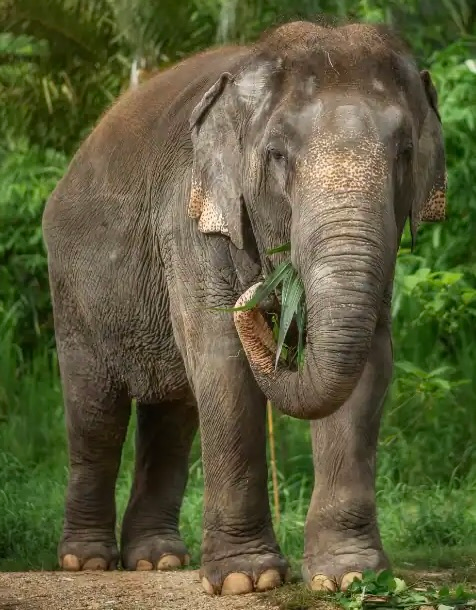
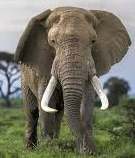
Asian elephants on the left and African elephants on the right are genetically distinct and belong to separate genera, having diverged roughly 5–10 million years ago,
a gap similar to that between humans and chimpanzees.
Asian elephants differ in several ways from the African elephants, with more than 10 distinct physical differences between them.
While sharing similar basic traits, they are fundamentally different species that cannot produce offspring, with Asian elephants being more closely related to ancient mammoths than to African elephants.
Below given are these differences.
10 Distinct Physical Differences
Ear Size/Shape: African elephant ears are massive and shape like the African continent. Asian elephant ears are smaller, rounded, and resembles India.
Back Shape: African elephant have a concave (saddle-shaped) back. Asian elephant have a convex or arched back.
Trunk Texture/Tips: African elephant trunks are smooth and have two distinct, opposing “fingers” at the tip. Asian elephant trunk are more ringed and have only one “finger“.
Tusks: Both male and female African elephants have tusks. In Asian elephants only males usually have large tusks, females have small or none.
Head Shape: African elephants have a uniform, rounded head without humps. Asian elephants have a twin-domed head with an indent in the middle.
Toenails: African elep[hants typically have 4 nails on the front feet and 3 on the back. Asian elephants have 5 nails on the front feet and 4 on the back.
Highest Point: On the African elephant the highest point is its shoulder. While the highest point on Asian elephant is the top of its head, or crown, particularly the two domes on tne forehead
Skin Texture: African elephants have deeply wrinkled skin. Asian elephants have smooth skin.
Abdominal Shape: African elephants have a straight or sagging abdomen. Asian elephants have a curved or sagging stomach.
Size and Weight: African elephants are larger and heavier (up to 8,000kg) while Asian elephants are smaller (5,500kg).
Unique Traits and facts – Elephants
The following Unique Traits were designed and here are a few unique facts
Elephants have very few sweat glands thereby their sweat cannot cool down to maintain their body temperature like humans,
They rely on 1specialised skin which is more permeable, 2large ears that act as radiators,
mud-soaking, and its
4toes to maintain the body temperature.
The 4toe pores are the only functional sweat glands in
Elephants, found in the cuticles or between their toes. Elephants
1skin a unique, highly wrinkled and thick structure, up to 2.5cm that acts as a vital, sensitive organ for temperature regulation and protection.
Its skin patterns are unique to each individual, acting in a similar way to human fingerprints. The intricate, criss-cross network of deep grooves, folds, and wrinkles forms a one-of-a-kind, living art pattern, with some wrinkles acting as a cooling mechanism, holding 5-10 times more water and mud than smooth skin to aid in thermal regulation.
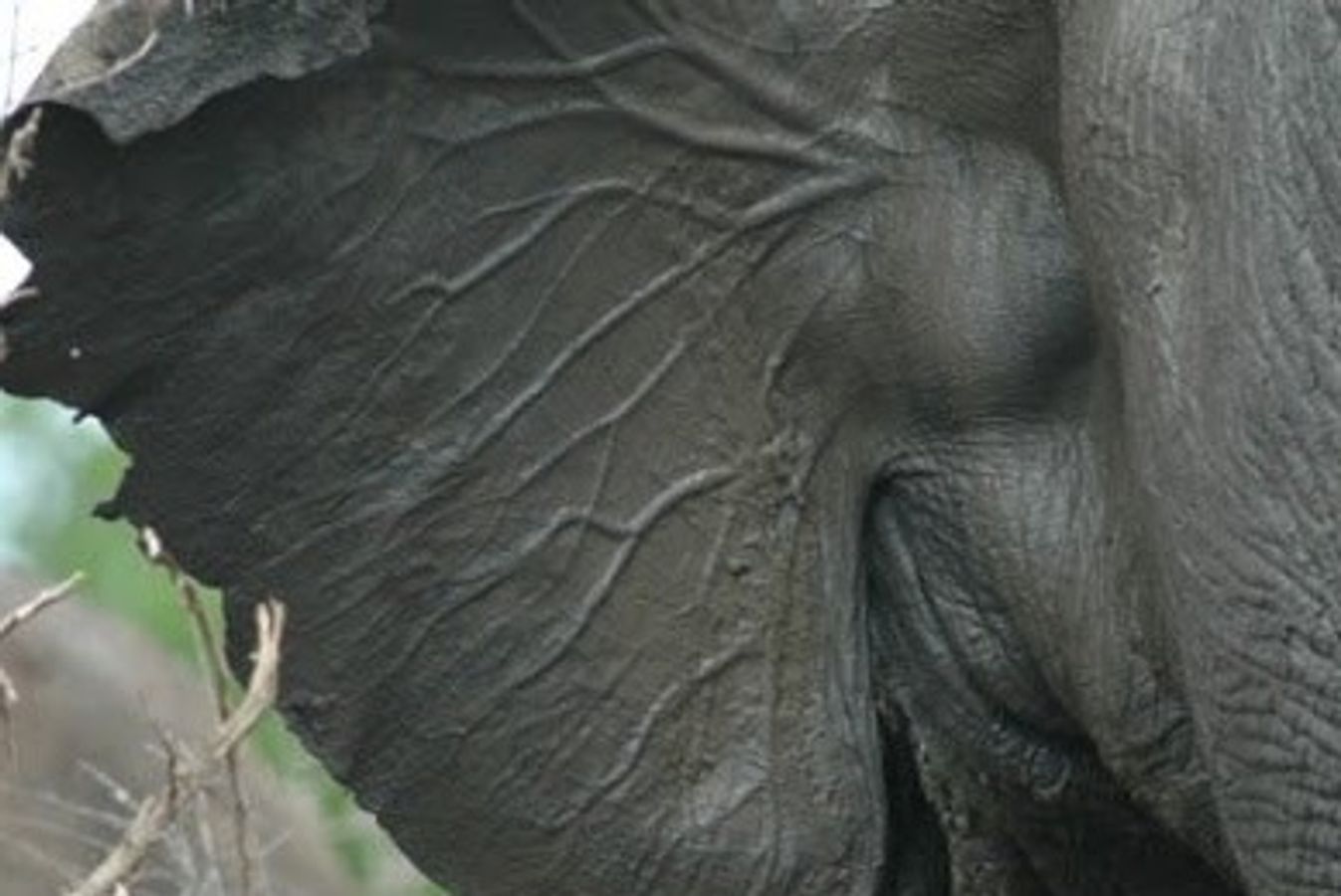
Elephant2ears are thin and packed with a dense network of blood capillaries close to the skin surface that act as a cooling radiator for blood, which is then circulated back into the body to lower overall body temperature.
Awesome Trunk
Elephants have around 150,000 muscle units with no bones in their trunk. The trunk functions as a hand, nose, and snorkel. Their trunks are perhaps the most sensitive organ found in any mammal and strong enough to lift around 350 kg / 770 lbs and sensitive enough to pick up a pin. Elephants use their trunks to suck up water to drink – it can contain up to 8 litres of water. They also use their trunks as a snorkel when swimming. Elephants don’t drink with their trunks as if it were a straw, but instead use them as a “glass” holding the water then pouring it into their mouth.
Herd of Elephants
An elephant herd is a complex, matriarchal family group typically consisting of 3 to 25 related adult females and their offspring. Led by the oldest, most experienced female (the matriarch). The Role of the Matriarch
The oldest and most experienced female leads the herd; her extensive knowledge of the environment, gathered over years, is invaluable. She influences critical aspects of herd life, including movement patterns, feeding habits, and survival strategies. For instance, her experience can guide the herd to water sources during droughts or to safer areas during potential threats. She is also integral in decision-making and conflict resolution. Her presence helps maintain harmony within the group, allowing for effective communication and cooperation among herd members. This social cohesion is vital, especially when it comes to nurturing the young, as the matriarch ensures that the calves receive the care and protection they need from the entire herd.
Teeth and Tusks
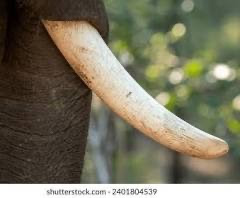
Elephants have 26 teeth in their life time that fall out and are replaced unlike in adult human. Elephant‘s tusks are overgrown teeth growing continuously. The tusks are made of dentine (a hard bony tissue), the same tissue that makes up human teeth, wrapped in hard enamel to protect the tusk from wear and tear.
are enlarge incisor teeth which appear
Female Asian elephants typically lack the long, prominent tusks seen in males, possessing instead small, inconspicuous ivory pegs known as
tushesWhat?.
These modified upper incisor teeth, which are smaller than male tusks, often barely extend the upper lip, and are sometimes not visible at all. Ivory is a hard, white material derived from the dentine that makes up the bulk of an Elephant‘s tusks. These tusks are actually modified upper incisor teeth that grow continuously throughout an elephant’s life, serving as vital tools for digging, defense, and feeding.
The tusk is not solid throughout; the base is hollow, while the tip becomes solid, featuring a sensitive nerve canal, making removal highly painful and damaging to the animal.
Key methods of elephant communication
Elephants use a highly sophisticated, multi-modal
communication systemClick the LINK to know more combining low-frequency sound (infrasound), seismic vibrations, chemical signals, and tactile gestures to interact over long distances. They produce sounds from 12 Hz rumbles to 112 dB trumpets to convey emotions, identity, and warnings, with some calls traveling over 10 km. Acoustic Communication (Sound): Rumbles are the most common, ranging from 12 to 470 Hz. Elephants use these deep, infrasonic sounds (below human hearing) to communicate through dense forests and across miles. Trumpets and cries can express distress, excitement, or playfulness. Seismic Communication (Vibrations): Elephants produce powerful, low-frequency rumbles that travel through the ground. Other elephants “hear” these vibrations through their sensitive leg bones and trunk/foot pads. Tactile Communication (Touch): Touch is vital for social bonding, reassurance, and greeting. Common actions include rubbing against each other, intertwining trunks during greetings or courtship, and using trunks to pat one another. Visual Communication (Body Language):They use their heads, ears, tails, and trunks to signal messages, such as spreading ears to show aggression or holding the head high to show dominance. Chemical Communication (Scent): Elephants have an acute sense of smell and use pheromones, urine, and feces to track, identify, or locate mates, which they investigate using their trunks. Social and Emotional Context: They can recognise specific calls from family members, and they use specific sounds for alarm, such as a unique rumble in response to bees.