Most of the information was from the below link.
Unique Traits of Sloth
The following Unique Traits were designed
- Digestive Systemclick
- Body Temperatureclick
- Hanging from the Branchclick
Digestive System
The reason sloths are very slow because their metabolism is extremely slow: 40–74% slower than other mammals their size. Eating a diet based solely on plants (the three-toed sloths only eat plants, while the two-toed sloths also like to snack on the occasional fruit, flower, egg and insect, if they can catch them – there are two main types of sloths, classified by the number of claws on their front feet: two-toed and three-toed sloths.) is a really hard feat for the sloth to digest the food.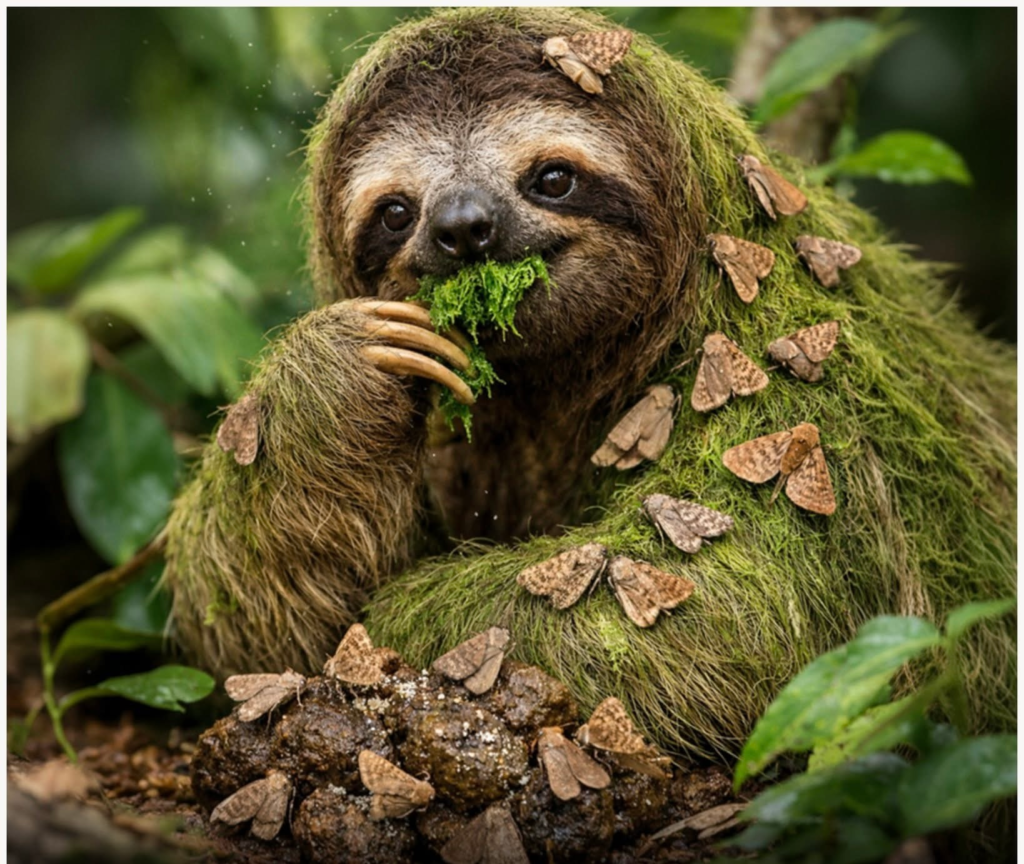
Sloths keep a constantly full stomach, and it’s so large it makes up 20–30% of their weight. Since a Sloth’s metabolism is so slow, it can take them up to a month to digest the food as a result they only relieve themselves once a week.
As a result these animals store up to a third of their body weight in faeces; lugging that extra weight around is no easy task for a Sloth. So why bother?
There must be a huge selective advantage or designed to this weird weekly routine. This remains one of the biggest mysteries surrounding Sloth behaviour and one that scientists have struggled to explain for decades.
When it’s time to poopClick to Know, the sloth slowly climbs down the tree trunk to reach the ground below. This journey is not easy for them because they are built for life in the trees, not on the ground. Despite the challenges, the sloth takes this weekly trip to keep its home clean and avoid attracting unwanted attention from insects or other animals to its tree. The process is so important that the sloths sometimes even bury their waste to maintain hygiene around their living space.
This unique behaviour shows just how adapted or designed sloths are to their environment and their slow-paced lifestyle. While this trip takes a lot of energy and time, the sloth’s commitment to cleanliness is impressive and highlights how every part of their behaviour is finely tuned to survive and thrive in the rainforest.
Body Temperature
Sloths have been designed not to keep themselves warm by stock up energy reserves, They heavily depend on their environment to heat up unlike rest of the warm-blooded mammals to maintain their body temperature. It is found their body temperature can fluctuate more than 10°C throughout the day.Sloth’s long, shaggy fur hides a secret world of algae, fungi, and insects – turning every sloth into a real-life, moving ecosystem. Their hair is finely grooved either vertically or perpendicularly, and those crevices are home to anywhere from four to six different types of algae, up to 16 different types of fungi, and various types of insects. The Cryptoses choloepimoth, dubbed the sloth moth, literally only lives in sloth fur, and so do some species of scarab beetles. There’s so much going on that the sloth’s coat even provides snacks for peckish birds. These tiny critters aren’t just hitching a ride or finding shelter or protection for free: this is a mutually helpful, symbiotic relationship. Housing so many organisms makes sloths even more effectively camouflaged against their natural green surroundings, so a sleeping sloth can easily be mistaken for a pile of leaves. Some experts think that this relationship, in the case of three-toed sloths, helps to explain why they climb down trees to do their business: for beetles and moths to lay their eggs in the droppings and continue growing on the sloth’s fur.
Hanging from the Branch
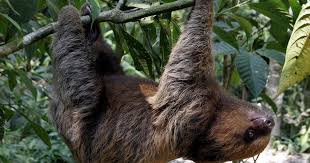
Sloths are known to spend a significant, nearly 90% of their time hanging vertically on their 4 limbs – eating, sleeping, mating, giving birth except for relieving, unlike the Bats hanging upside down – hanging on 2 limbs head pointed downward.
Sloths have unique, reversed limb anatomy designed for extreme energy conservation. Specialised, long, curved claws act as hooks that lock into place, allowing them to hang and hold onto branches for hours with nearly zero energy expenditure. They burn minimal energy by resting 15–20 hours a day and having 30% less muscle mass than similar mammals.
It’s interesting to note sloths resting posture resembles that of human beings. To rejuvenate human beings lie down horizontally on a flat surface. And the sloths hang horizontally.
Unlike humans, whose muscles burn energy to hold a grip, sloth flexor tendons lock, meaning they hang without active muscle engagement.
Their muscles are specialised for pulling, not pushing, allowing for high strength in hanging but preventing normal walking on the ground.
It’s interesting to note sloths resting posture resembles that of human beings. To rejuvenate human beings lie down horizontally on a flat surface. And the sloths hang horizontally.
Unlike humans, whose muscles burn energy to hold a grip, sloth flexor tendons lock, meaning they hang without active muscle engagement.
Their muscles are specialised for pulling, not pushing, allowing for high strength in hanging but preventing normal walking on the ground.