The most well-known species in the US is the ruby-throated hummingbird, which moves to Mexico and Central America to spend its winter, before embarking on a marathon flight across the Gulf of Mexico to breed in Northern America. But there are some known to fly around the Gulf of Mexico. Some hummingbirds complete the journey in one non-stop flight.
Hummingbirds are lightning-fast tiny birds with eye-catching, colourful feathers that make them dazzle like jewels in the sun.
Some hummingbird having bodies as small as your thumb, hummingbirds beat their wings an average of 3,000 times per minute in a figure of eight pattern that creates lift on both the up and down strokes. Some hummingbirds can fly at speeds of over 33 miles per hour.
They can hover in mid-air, fly upside down and backwards, and turn on a hairpin, displaying incredible acrobatic prowess. They are also the world’s smallest migratory bird, with some species flying upwards of 4,000 miles to reach their breeding grounds
Unique Physical Characteristics
- Smallest migrating bird: They don’t migrate in flocks like other species, and they typically travel alone for up to 500 miles at a time.
For example, one rufous hummingbirds was tracked more than 3,500 miles travellingClink to know from Florida to Alaska. The longest recorded migration of any hummingbird — a 5,200-mile round tripClink to know between the Chilean coast and the Peruvian Andes – meanwhile, can be attributed to the southern giant hummingbirdClink to know - Iridescent Plumage: Their colors are not just pigments; structural arrangement of their feathers refracts light like a prism, producing shimmering metallics.
- High Metabolism: to fuel their fabulous activity. They possess a heart rate that can exceed 1,200 beats per minute. They must consume a colossal volume of nectar, about 50% to 100% of its body weight in nectar every day.
- Specialised Bills: Long, slender bills coupled with highly extendable tongues allow them to reach nectar deep within tubular blossoms.
It has been observed Hummingbirds drink the nectar found in feeders by moving their tongue in and out about 13 times per second. - Hibernation Mode: To survive cold nights or times when food is scarce, they go into a deep sleep, hibernation-like sleep called torpor dramatically lowering their body temperature and slowing their heart rate conserve energy and keep from starving. Hummingbirds have no sense of smell. While they can’t sniff out feeders, they do have good color vision. Some birds like the Ruby-throated Hummingbird prefer orange or red flowers.
- Nesting: The average number of eggs laid by female hummingbirds only two. These eggs have been found in nests
nests are tiny, cup-shaped masterpieces woven by female hummingbirds, measuring only about the size of a ping-pong ball or walnut. They are constructed from soft plant down, bound together with stretchy spider silk, and camouflaged on the outside with lichen or moss to blend seamlessly into branches.
Some species, like the Black-chinned Hummingbird make their nests with plant down, spider silk, and other natural resources that can expand as their babies grow after hatching. Everything You Need to Know About Hummingbird NestsClink to know
Honour share with my readers. - Legs for Perching Only: Their legs and feet are very weak. They can only use them to perch or scoot sideways, meaning they cannot walk or hop on the ground.
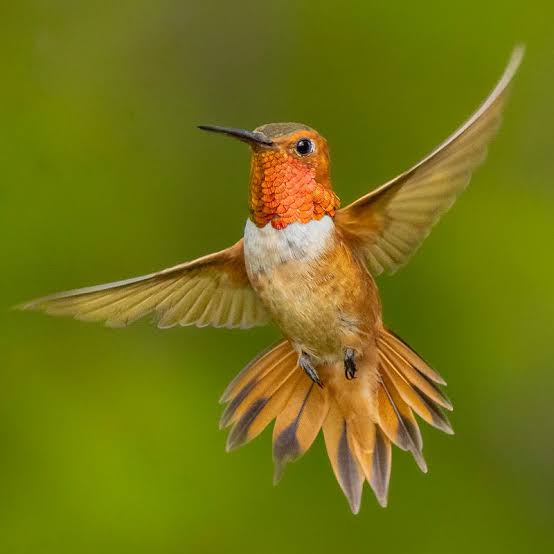

The blindingly fast flapping and twisting motion of the wing structure generates an incredible amount of friction, and thus, heat (in addition to that of muscle metabolism). For comparison, fast man-made machines need sophisticated cooling systems. The brisk flapping motion allows these birds to dissipate all that generated heat from their body across their rapidly fanning wing. Other modes of heat dissipation include rapid air respiration, heat exchange through the skin and bill, and water bathing.