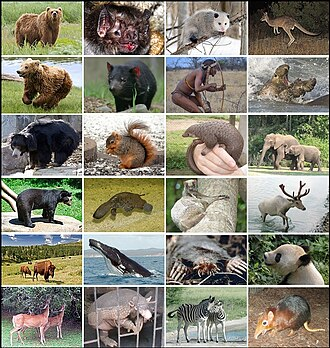
10 Unique Characteristics of Mammals
- Mammary Glands: All female mammals possess mammary glands that produce milk for their new born, which is a crucial nutrient source for the young.
- Hair or Fur: All mammals have hair or fur at some point in their lives, which provides insulation, sensory input, and protection.
- Warm-blooded: Mammals maintain a constant internal body temperature regardless of their environment, supported by a fast metabolism.
- Three Middle Ear Bones: They possess three bones in the middle ear—the malleus (hammer), incus (anvil), and stapes (stirrup)—which are not found in other vertebrates.
- Live Birth: The vast majority of mammals are viviparous, meaning they give birth to live young rather than laying eggs.
- Diaphragm: Mammals have a diaphragm, a muscle that separates the chest cavity from the abdominal cavity, which makes breathing more efficient.
- Specialised Teeth: Most mammals have heterodont dentition, meaning they have varying shapes, sizes, and functions of teeth (incisors, canines, premolars, molars) for different functions.
- Lower jaw: The Mammal lower jaw is hinged directly to the skull, instead of through a separate bone
- Brain Structure: Mammals have a more developed, larger brain than other animal groups, with a neocortex region respo,nsible for higher cognitive functions.
- Four-Chambered Heart: Efficient blood circulation.
These 10 unique characteristics of all 6,000+ Mammals were designed. And the Mammals did not to evolve / adopt to have these traits.
Types of Mammals
- Placental Mammals: are a group of mammals defined by the presence of a complex, long-lasting placenta that connects the developing fetus to the mother’s uterus. This organ provides oxygen, nutrients, and waste removal, allowing for a long gestation period where the young develop to an advanced stage before birth.
- Marsupials: Give birth to underdeveloped young, which continue to develop in the mother’s
pouch
(e.g., kangaroos, koalas). - Monotremes: A small group of mammals that lay eggs. Only two kinds of mammals are left on the earth today—the duck-billed platypus and the echidna, or spiny anteater.
Mammals Designed to possess Special Traits